
BLOG ARTICLES

The RCM Guide for Healthcare
Providers in the USA

July 4, 2026

Medical management represents a comprehensive approach to coordinating clinical care, operational efficiency, and financial performance within healthcare organizations. This multifaceted discipline encompasses everything from treatment protocol development to resource allocation, ensuring that providers deliver high-quality care while maintaining financial sustainability. As healthcare becomes increasingly complex, understanding the core principles of medical management has become essential for practices seeking to thrive in a value-based care environment.

Understanding the Core Components of Medical Management

Medical management extends far beyond simple patient care coordination. It involves strategic oversight of clinical protocols, utilization review, case management, and quality improvement initiatives that collectively shape how healthcare organizations function.

Key elements include:

  • Evidence-based clinical guidelines and treatment pathways
  • Utilization management and prior authorization processes
  • Quality measurement and performance tracking
  • Care coordination across multiple providers and settings
  • Population health management strategies

The appropriate use of medical resources plays a critical role in ensuring that patients receive necessary care without overutilization. This balance directly impacts both clinical outcomes and revenue cycle performance, making it a priority for healthcare administrators.

Medical management workflow integration

The Clinical Decision-Making Framework

Effective medical management relies on structured clinical decision-making that combines provider expertise with standardized guidelines. Evidence-based care guidelines provide the foundation for consistent, high-quality treatment decisions across patient populations.

Healthcare providers must balance individual patient needs with established protocols while documenting decisions thoroughly for compliance and reimbursement purposes. This documentation becomes critical when claims undergo review, as payers increasingly require justification for treatment approaches.

Implementing Quality Measures in Medical Management

Quality metrics serve as the backbone of successful medical management programs. These measurements track clinical outcomes, patient satisfaction, operational efficiency, and financial performance.

Quality Dimension Key Metrics Impact on Revenue
Clinical Outcomes Readmission rates, complication rates Reduced penalties, improved reimbursement
Patient Experience Satisfaction scores, access to care Higher patient retention, referrals
Operational Efficiency Wait times, resource utilization Lower costs, increased capacity
Financial Performance Clean claim rate, days in A/R Faster payments, reduced denials

The American Academy of Family Physicians emphasizes quality measures as essential tools for improving patient outcomes while demonstrating value to payers. These metrics increasingly influence reimbursement rates under value-based payment models.

Connecting Medical Management to Revenue Cycle Success

Medical management directly influences revenue cycle performance through multiple channels. Proper utilization review prevents denials related to medical necessity, while thorough documentation supports appropriate coding and billing.

When clinical teams follow established protocols and document care comprehensively, denial management services become more effective at recovering revenues and preventing future claim rejections. The connection between clinical quality and financial performance has never been stronger.

Revenue cycle touchpoints include:

  1. Pre-service planning – Eligibility verification and prior authorization
  2. Point-of-service documentation – Real-time coding accuracy
  3. Post-service review – Claim submission and follow-up
  4. Ongoing monitoring – Pattern analysis and process improvement

Revenue cycle and medical management connection

Best Practices for Medical Office Operations

Implementing effective medical management requires structured operational practices that support both clinical and administrative functions. Managing a successful medical office demands attention to leadership, organizational structure, and patient-centered processes.

Streamlining Administrative Workflows

Administrative efficiency directly supports clinical quality and financial performance. When practices optimize their workflows, providers spend less time on paperwork and more time delivering care.

Modern medical billing services integrate seamlessly with clinical operations, ensuring that documentation flows smoothly from patient encounter to claim submission. This integration reduces errors, accelerates payment cycles, and improves overall practice performance.

  • Standardized documentation templates
  • Automated eligibility verification processes
  • Real-time coding assistance
  • Integrated practice management systems
  • Regular staff training and competency assessment

Technology Integration in Medical Management

Healthcare technology platforms enable sophisticated medical management capabilities that were impossible just a few years ago. Analytics tools track quality metrics, identify utilization patterns, and flag potential compliance issues before they become problems.

Healthcare revenue cycle analytics provide actionable insights that inform both clinical and operational decisions. These data-driven approaches help practices identify improvement opportunities and measure the impact of medical management initiatives.

Specialty-Specific Medical Management Considerations

Different medical specialties face unique medical management challenges that require tailored approaches. Gastroenterology practices, for example, must navigate specific protocols like the medical management of microscopic colitis, which requires detailed understanding of treatment algorithms and documentation requirements.

Specialty Management Focus Revenue Impact
Cardiology Procedure appropriateness, device tracking High-value claims, complex coding
Urology Utilization management, bundled payments Episode-based reimbursement
Hepatology Chronic disease management, specialty pharmacy Ongoing care coordination

Specialty practices benefit from medical coding services that understand the nuances of their specific documentation requirements and payer policies. This expertise ensures that complex cases receive appropriate reimbursement.

Specialty medical management workflows

Compliance and Risk Management Integration

Medical management programs must incorporate robust compliance measures to protect both patients and practice financial health. HIPAA compliance, documentation standards, and payer policies create a complex regulatory environment that requires constant attention.

Critical compliance areas include:

  • Privacy and security protocols for patient information
  • Fraud and abuse prevention measures
  • Proper use of modifiers and coding accuracy
  • Medical necessity documentation standards
  • Timely filing and claim submission requirements

Understanding contractual adjustments in medical billing helps practices navigate the financial implications of payer agreements while maintaining compliant billing practices. These adjustments represent the difference between billed charges and allowed amounts under contract terms.

Staff Education and Ongoing Training

Successful medical management requires well-trained staff who understand both clinical protocols and administrative requirements. Regular education ensures that team members stay current with evolving guidelines, payer policies, and regulatory changes.

Cross-functional training strengthens the connection between clinical and revenue cycle staff, fostering collaboration that benefits the entire organization. When clinical teams understand billing implications and billing staff grasp clinical rationale, the entire practice operates more efficiently.

Investment in professional development pays dividends through improved accuracy, reduced rework, and enhanced patient satisfaction. Staff who feel competent and confident in their roles deliver better results across all performance dimensions.


Medical management represents the intersection of clinical excellence and operational efficiency, creating sustainable healthcare delivery models that benefit patients and providers alike. By implementing structured protocols, measuring quality outcomes, and maintaining robust documentation practices, healthcare organizations can optimize both care delivery and financial performance. Greenhive Billing Solutions supports these efforts through comprehensive revenue cycle management services that align with clinical operations, ensuring maximum reimbursement while maintaining compliance standards. Our experienced team works within your existing systems to streamline processes, reduce denials, and improve cash flow, allowing your clinical staff to focus on delivering exceptional patient care.

July 3, 2026

Healthcare organizations face increasing complexity in managing provider networks, credentials, and enrollment processes. Provider management services have emerged as essential solutions for maintaining compliant, efficient operations while maximizing revenue potential. These comprehensive services encompass credentialing, enrollment, network management, and ongoing monitoring to ensure healthcare providers remain active with payers and ready to deliver care.

Understanding Provider Management Services

Provider management services represent a suite of administrative and compliance functions that keep healthcare providers credentialed, enrolled, and operational. These services extend beyond simple paperwork processing to include strategic network optimization and revenue protection. Healthcare organizations rely on these services to maintain relationships with insurance payers, ensure regulatory compliance, and prevent revenue disruptions.

The scope includes initial credentialing, payer enrollment, re-credentialing cycles, CAQH profile management, and ongoing monitoring of license renewals and certifications. Comprehensive provider data management ensures accuracy across all platforms and prevents claim denials due to outdated information.

Core Components of Effective Provider Management

Credentialing and Verification

Credentialing forms the foundation of provider management services. This process validates provider qualifications, education, training, work history, and malpractice coverage. Organizations must verify board certifications, DEA registrations, state licenses, and professional references before submitting applications to payers.

Thorough credentialing management solutions incorporate continuous monitoring to catch expiring credentials before they cause service interruptions. Automated alerts help prevent lapses that could result in claim denials or network exclusions.

Payer Enrollment and Contracting

Once credentialing completes, enrollment with insurance networks begins. This multi-step process requires submitting applications, negotiating fee schedules, and establishing billing procedures with each payer. Provider enrollment and credentialing services streamline these complex workflows and reduce time to revenue.

Provider enrollment workflow stages

Benefits of Outsourcing Provider Management Services

Benefit Category Impact on Operations Financial Result
Compliance Assurance Reduced regulatory violations Avoids penalties and sanctions
Revenue Acceleration Faster enrollment timelines Earlier claim submission capability
Administrative Efficiency Staff focuses on patient care Lower overhead costs
Error Reduction Fewer application rejections Minimized enrollment delays

Healthcare organizations gain significant advantages by partnering with specialized provider management services. These benefits extend across operational, financial, and strategic dimensions.

Accelerated Revenue Cycle Performance

Provider management directly impacts revenue cycle velocity. Delays in credentialing or enrollment create gaps where services cannot be billed to specific payers. Revenue cycle management for providers depends on maintaining active provider statuses across all contracted networks.

Organizations using professional provider management services typically experience 30-45% faster enrollment completion compared to internal processing. This acceleration translates to earlier revenue recognition and improved cash flow. Integration with denial management services creates a comprehensive approach to revenue protection.

Compliance and Risk Mitigation

Healthcare compliance requirements continually evolve. Provider management services maintain expertise in federal regulations, state-specific requirements, and payer-specific policies. This specialized knowledge protects organizations from compliance violations that could trigger audits, fines, or network terminations.

Ongoing monitoring ensures licenses, certifications, and insurance policies remain current. Healthcare management services relieve administrative burdens while maintaining regulatory adherence across multiple jurisdictions.

Strategic Implementation of Provider Management Services

Selecting the Right Service Partner

Organizations should evaluate potential provider management partners based on specific criteria:

  • Payer Network Breadth: Coverage across Medicare, Medicaid, and commercial payers
  • Technology Integration: Compatibility with existing practice management systems
  • Turnaround Times: Average completion timeframes for credentialing and enrollment
  • Compliance Track Record: History of successful audits and regulatory reviews
  • Communication Protocols: Transparency in status updates and issue resolution

Healthcare office solutions demonstrate the value of streamlined payer enrollment and contracting expertise. Organizations benefit from established relationships between service providers and major insurance networks.

Provider management technology integration

Integration with Revenue Cycle Operations

Provider management services function most effectively when integrated with broader revenue cycle processes. Connection points include:

  1. Eligibility Verification: Ensuring eligibility verification services have current provider information
  2. Claims Submission: Coordinating with medical claim submission services to prevent rejections
  3. Payment Posting: Aligning provider IDs across all billing systems
  4. Analytics and Reporting: Tracking credentialing status within healthcare revenue cycle analytics

This integration creates seamless workflows where provider status updates automatically trigger relevant system changes across the revenue cycle.

Operational Excellence Through Provider Network Management

Provider network management services encompass ongoing maintenance activities that extend beyond initial enrollment. These activities include demographic updates, practice location changes, and service line additions.

Maintaining Data Accuracy Across Platforms

Provider information must remain consistent across multiple platforms including CAQH, NPPES, payer portals, and internal systems. Discrepancies create claim denials and payment delays. Professional provider management services implement data governance protocols that ensure accuracy across all touchpoints.

Key Maintenance Activities:

  • Quarterly CAQH attestations
  • License renewal tracking and submission
  • Malpractice insurance updates
  • Tax identification verification
  • Practice location and contact updates

Fast and accurate enrollment processes keep providers active and prevent revenue interruptions during transitions or expansions.

Re-credentialing and Continuous Monitoring

Payers require re-credentialing every 24-36 months. Missing re-credentialing deadlines results in network removal and immediate revenue loss. Provider management services track these cycles and initiate renewals with appropriate lead time.

Continuous monitoring includes sanctions screening, license verification, and board certification status checks. These ongoing reviews protect organizations from employing or contracting with providers who have developed disqualifying issues.

Technology and Automation in Provider Management

Modern provider management services leverage technology platforms that automate repetitive tasks and improve accuracy. These systems track deadlines, manage document collection, submit applications electronically, and provide real-time status visibility.

Technology Feature Operational Benefit Example Application
Automated Alerts Proactive deadline management License expiration notifications
Document Management Centralized credential storage Digital certificates and attestations
Workflow Automation Reduced manual processing Auto-population of payer applications
Status Dashboards Real-time visibility Enrollment progress tracking
Integration APIs Seamless data exchange Synchronization with practice systems

Organizations benefit from platforms that integrate with existing systems rather than creating data silos. Medical billing software for small businesses often includes credentialing modules that connect with provider management workflows.

Provider credentialing compliance checklist

Measuring Provider Management Service Performance

Organizations should establish key performance indicators to evaluate provider management effectiveness:

  • Average Enrollment Timeline: Days from application submission to payer approval
  • First-Pass Application Approval Rate: Percentage of applications approved without rework
  • Credential Expiration Rate: Number of expired credentials requiring emergency processing
  • Claim Denial Rate Due to Credentialing: Percentage of denials from provider status issues
  • Re-credentialing Completion Rate: On-time completion of renewal cycles

These metrics provide visibility into service quality and identify improvement opportunities. Regular performance reviews ensure provider management services align with organizational revenue goals and compliance requirements.


Provider management services deliver essential infrastructure for healthcare revenue cycle success by maintaining compliant provider networks and preventing enrollment-related revenue disruptions. Organizations gain operational efficiency, compliance assurance, and revenue acceleration through specialized expertise and technology platforms. Greenhive Billing Solutions provides comprehensive revenue cycle management services that integrate credentialing, enrollment, and ongoing provider maintenance with medical billing, claims processing, and denial management. Our team ensures your providers remain active across all payer networks while maximizing reimbursements and streamlining administrative operations throughout the United States.

Medicare billing updates - June 2026

July 2, 2026

CMS’ June 25, 2026 MLN Connects update is packed with billing, coding, compliance, and reimbursement changes that healthcare providers should not ignore. The update touches multiple provider types, including ESRD facilities, hospitals, skilled nursing facilities, clinical laboratories, DME suppliers, telehealth providers, and Medicare Part B drug billers. CMS highlighted the CY 2027 ESRD proposed payment rule, the upcoming PEPPER relaunch, CLFS data reporting deadlines, telehealth enrollment guidance, DME compliance risks, July Part B drug pricing revisions, OPPS updates, and a revised Skilled Nursing Facility 3-Day Rule billing fact sheet.

For billing teams, this update is more than regulatory news. It is a reminder to review claims workflows, update coding systems, validate documentation, and prepare for audit visibility before denials or recoupments occur.

1. ESRD Proposed Payment Rule: CY 2027 Rate and Policy Changes

CMS issued the CY 2027 End-Stage Renal Disease Prospective Payment System proposed rule for renal dialysis services furnished on or after January 1, 2027. CMS is proposing to increase the ESRD PPS base rate to $299.55, with an estimated 1.1% increase in total payments to all ESRD facilities. The proposed base rate includes a $15.96 increase to account for phosphate binders being incorporated into the ESRD PPS base rate.

The proposed rule also includes changes to the low-volume payment adjustment, pediatric patient payment adjustments, the home and self-dialysis training add-on amount, technical modifications to TDAPA, and a proposed post-TDAPA add-on payment adjustment. CMS is also proposing ESRD Quality Incentive Program changes beginning in CY 2029, including replacement of the Hypercalcemia reporting measure with a chronic hyperphosphatemia clinical measure.

Billing action step: ESRD facilities should start modeling the proposed 2027 payment impact now, especially around phosphate binders, home dialysis training, pediatric patient adjustments, and drugs or products affected by TDAPA or post-TDAPA treatment. Comments on the ESRD proposed rule are due by August 24, 2026.

2. PEPPER Is Relaunching for Medicare Facility Types

CMS announced that the Program for Evaluating Payment Patterns Electronic Report, known as PEPPER, is relaunching in the coming months for Medicare facility types, including hospitals, post-acute care providers, and specialty facilities. PEPPER helps facilities review Medicare billing data, identify billing patterns that may need improvement, monitor under-coding or over-coding, and track trends such as longer patient stays.

The PEPPER resource page describes PEPPER as a Microsoft Excel report that summarizes provider-specific Medicare data statistics for target areas associated with improper payments due to billing, DRG coding, and admission necessity issues. It also compares provider performance with national, state, and Medicare Administrative Contractor jurisdiction data.

Billing action step: Authorized officials, access managers, and staff end users should verify access through the PEPPER Portal. Staff end users need to sign in through the CMS Identity & Access system, request the PEPPER business function, and receive approval from their organization’s authorized official or access manager.

3. Clinical Diagnostic Laboratories: CLFS Reporting Deadline Is July 31, 2026

Applicable independent laboratories, physician office laboratories, and hospital outreach laboratories must report Clinical Laboratory Fee Schedule data by July 31, 2026. CMS states that the reporting period runs from May 1 through July 31, 2026, and is based on the updated data collection period of January 1 through June 30, 2025. Required reporting includes applicable HCPCS codes, private payor rates, and test volume data.

CMS also notes that there is no CLFS phase-in reduction in 2026, while beginning January 1, 2027 through 2029, payment may not be reduced by more than 15% per year compared with the payment amount established for the test in the preceding year.

Billing action step: Labs should confirm whether they meet the definition of an applicable laboratory, validate TIN/NPI relationships, reconcile final paid private payor claims, and ensure submitter and certifier roles are ready before the deadline.

4. Telehealth Enrollment: CMS Clarifies Home Address and Reassignment Rules

CMS’ telehealth enrollment guide clarifies that providers who furnish telehealth services from home but also have a physical practice location do not need to report their home address on the Medicare enrollment application. Providers who operate virtual-only telehealth services and have no other physical practice location must report the home address as the practice location. CMS also states that providers are not required to enroll in the state where the beneficiary resides, but CMS defers to state law for telehealth licensure requirements.

Billing action step: Telehealth providers should audit PECOS enrollment records, reassignment arrangements, practice location settings, and state licensure rules. A clean enrollment record reduces avoidable claim delays and supports accurate MAC jurisdiction handling.

5. DME Compliance: Catheter and Tracheostomy Supplies Remain High-Risk

CMS highlighted an OIG report finding improper Medicare payments for intermittent urinary catheters and kits. OIG reviewed catheter claims from July 2021 through June 2022 and found that 15 of 105 sampled items did not meet Medicare requirements. OIG estimated that approximately $35.1 million of the $303.3 million Medicare paid for catheters and kits during the audit period was improperly paid, with an estimated $8.8 million in related beneficiary coinsurance. Common issues included unsupported eligibility for curved-tip catheters or sterile catheter kits, refill problems, proof of delivery issues, and standard written order deficiencies.

CMS’ urological supplies compliance tip reports a 45.2% improper payment rate for urological supplies in the 2024 reporting period, with a projected improper payment amount of $257.8 million. CMS states that no documentation accounted for 80.2% of improper payments, while insufficient documentation accounted for another 16%.

CMS also flagged tracheostomy supplies. For 2024, CMS reports a 25.6% improper payment rate and a projected improper payment amount of $6.5 million. Insufficient documentation accounted for 55.9% of improper payments for tracheostomy supplies. CMS also notes that tracheostomy care or cleaning starter kit code A4625 is no longer considered medically necessary starting two weeks after the operation.

Billing action step: DME suppliers should tighten documentation workflows for medical necessity, refill requests, proof of delivery, standard written orders, quantity limits, and patient-specific justification for supplies beyond usual maximums.

6. July 2026 Medicare Part B Drug Pricing and OPPS Updates

CMS issued July 2026 quarterly Average Sales Price and Not Otherwise Classified pricing updates, including revisions to July 2026, April 2026, January 2026, October 2025, and July 2025 pricing files. CMS Transmittal R13670CP lists an implementation date of July 6, 2026 for the July 2026 quarterly ASP Medicare Part B drug pricing files and prior-quarter revisions.

CMS’ ASP Pricing Files page shows the July 2026 Medicare Part B Payment Limit Files and July 2026 NDC-HCPCS Crosswalk as final files dated June 17, 2026, and also lists revised prior-quarter files. CMS cautions that the absence or presence of a HCPCS code, NDC code, or payment limit in ASP pricing files does not determine Medicare coverage for a product.

The July 2026 Hospital Outpatient Prospective Payment System update is effective July 1, 2026 and includes new COVID-19 monoclonal antibody products and administration codes, proprietary laboratory analyses coding changes, new and reassigned Category III CPT codes, device pass-through information, APC assignment and status indicator changes, drug and biological updates, non-opioid treatments for pain relief, and skin substitute product changes.

CMS also states that, starting July 1, 2026, payment rates for many drugs and biologicals are changing from the rates published in the CY 2026 OPPS and ASC final rule because of new ASP calculations. CMS notes that providers may resubmit claims affected by adjustments to previous quarter payment files.

Billing action step: Hospitals and Part B drug billers should update chargemasters, claim scrubbers, HCPCS files, drug crosswalks, and payment validation tools. Claims affected by prior-quarter corrections should be reviewed for potential resubmission where appropriate.

7. Skilled Nursing Facility 3-Day Rule Billing: Revised Guidance

CMS revised its Skilled Nursing Facility 3-Day Rule Billing fact sheet to include information on the Transforming Episode Accountability Model SNF 3-Day Rule Waiver. CMS explains that Medicare SNF coverage generally requires a medically necessary inpatient hospital stay of three consecutive calendar days before SNF admission, excluding the discharge day and excluding time spent in the emergency department or outpatient observation before admission.

CMS also clarifies that certain Medicare Shared Savings Program ACO participation options and CMS Innovation Center models, including ACO REACH and TEAM, may allow SNF services without a prior three-day inpatient hospitalization when waiver requirements are met.

Billing action step: Hospitals and SNFs should confirm inpatient status dates before discharge, communicate qualifying stay information clearly, verify waiver eligibility when applicable, and make sure claim coding aligns with Medicare processing rules.

What Providers Should Do Next

CMS’ June 25 update points to one clear message: billing accuracy, documentation readiness, and system updates must happen before claims are submitted. Providers should prioritize:

  1. ESRD payment impact modeling for CY 2027
  2. PEPPER portal access and audit planning
  3. CLFS reporting completion before July 31, 2026
  4. Telehealth enrollment record review
  5. DME documentation audits for urological and tracheostomy supplies
  6. Part B drug pricing and OPPS system updates
  7. SNF 3-Day Rule verification and waiver workflow review

How Greenhive Billing Solutions Can Help

Greenhive Billing Solutions helps healthcare organizations translate CMS updates into clean claims, stronger documentation, and fewer avoidable denials. Whether your organization needs Medicare billing support, coding updates, DME documentation review, laboratory reporting preparation, PEPPER analysis, provider enrollment support, or denial prevention, our team can help you stay ahead of regulatory changes and protect revenue.

Need help preparing for these CMS updates? Contact Greenhive Billing Solutions for a Medicare billing and compliance readiness review.


Disclaimer: This article is for informational purposes only and should not be treated as legal, clinical, or regulatory advice. Providers should review CMS guidance, payer instructions, and applicable MAC rules for their specific circumstances.

References

  1. Centers for Medicare & Medicaid Services. MLN Connects Newsletter for June 25, 2026. This is the main CMS update covering ESRD, PEPPER, CLFS reporting, telehealth enrollment, compliance tips, Part B drug pricing, OPPS updates, and SNF billing guidance.
  2. Centers for Medicare & Medicaid Services. Calendar Year 2027 End-Stage Renal Disease Prospective Payment System Proposed Rule Fact Sheet. Use this source for the ESRD PPS base rate, payment increase, phosphate binder update, TDAPA changes, and ESRD Quality Incentive Program updates.
  3. Centers for Medicare & Medicaid Services. End-Stage Renal Disease Prospective Payment System page. Use this for the CY 2027 ESRD proposed rule comment deadline and related ESRD payment rule materials.

July 2, 2026

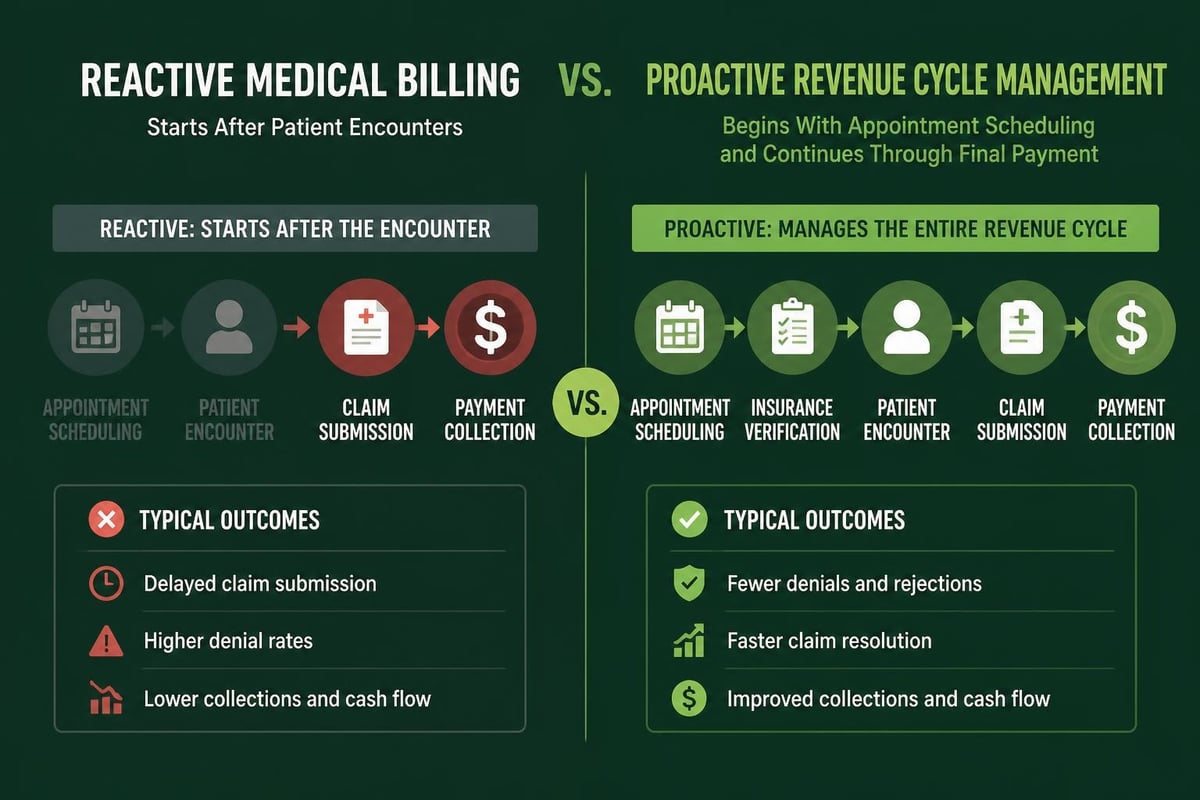
The financial health of any healthcare practice depends on a well-structured revenue cycle workflow. This systematic approach encompasses every step from initial patient contact to final payment collection, ensuring that providers receive appropriate reimbursement for services rendered. Understanding and optimizing this workflow has become increasingly critical as reimbursement models grow more complex and claim denials rise across the industry.

Understanding the Core Components of Revenue Cycle Workflow

A comprehensive revenue cycle workflow consists of multiple interconnected stages that work together to maximize financial performance. Each component plays a vital role in the overall success of revenue collection.

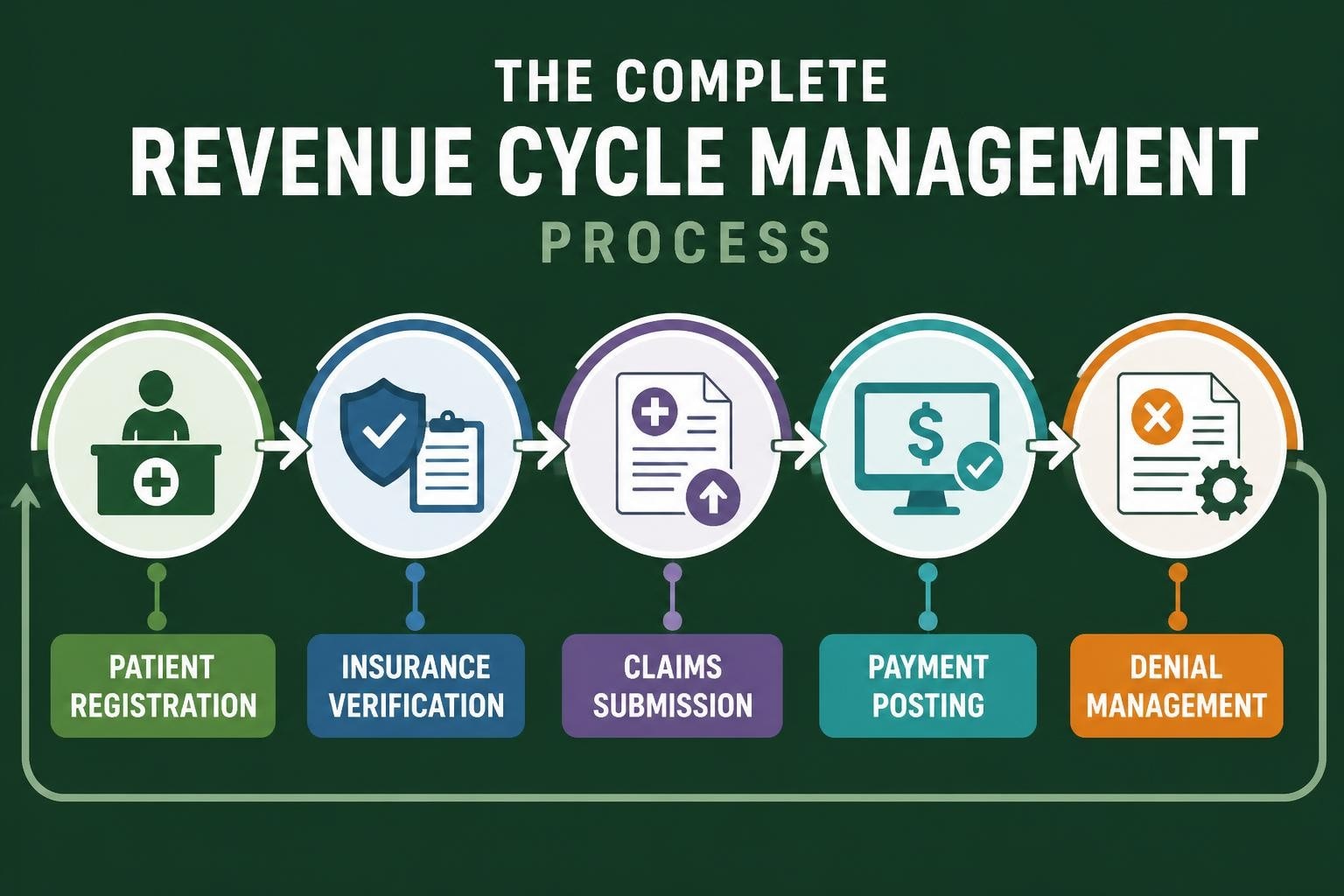
The American Hospital Association provides valuable insights into how healthcare organizations structure their revenue cycle processes. The workflow typically begins with patient registration and insurance verification, progresses through charge capture and claims submission, and concludes with payment posting and accounts receivable management.

Revenue cycle workflow stages

Front-End Revenue Cycle Processes

The front-end portion of the revenue cycle workflow establishes the foundation for successful reimbursement. This phase includes several critical activities:

  • Patient registration and demographic data collection
  • Insurance eligibility and benefits verification
  • Prior authorization acquisition when required
  • Patient financial responsibility estimation
  • Copayment and deductible collection at point of service

Effective insurance eligibility verification prevents downstream complications that can delay payment. Verification must occur before service delivery whenever possible, ensuring that coverage is active and services are covered under the patient's plan.

Pre-service collections significantly improve overall collection rates. When practices clearly communicate patient financial responsibility upfront and collect applicable amounts before or during the visit, they reduce the burden on back-end collection efforts.

Middle Revenue Cycle Workflow Operations

The middle phase of the revenue cycle workflow encompasses charge capture, coding, and claims generation. These processes translate clinical services into billable transactions.

Accurate Charge Capture and Documentation

Charge capture represents a critical juncture where clinical documentation transforms into revenue opportunity. Missed charges directly impact practice profitability, making systematic charge capture essential.

Healthcare providers must implement robust processes to ensure all billable services are captured. This includes procedures, supplies, pharmaceuticals, and ancillary services. Understanding what CPT codes represent helps clinical staff recognize billable activities.

Key charge capture best practices include:

  1. Real-time charge entry whenever possible
  2. Regular charge reconciliation against clinical schedules
  3. Automated charge capture systems integration
  4. Staff training on documentation requirements
  5. Periodic audits to identify capture gaps

Medical Coding Within the Workflow

Medical coding serves as the language of reimbursement within the revenue cycle workflow. Professional coders translate clinical documentation into standardized diagnosis and procedure codes that payers recognize.

The different types of medical coding each serve specific purposes within the billing process. Diagnosis codes justify medical necessity, while procedure codes describe services provided. Accurate coding directly impacts claim acceptance rates and appropriate reimbursement levels.

Coding Element Purpose Impact on Revenue
Diagnosis codes (ICD-10) Establish medical necessity Prevents denials for lack of justification
Procedure codes (CPT) Describe services rendered Determines reimbursement amount
Modifiers Clarify special circumstances Affects payment calculation
Revenue codes Categorize services for facilities Required for institutional claims

Understanding revenue codes in medical billing ensures comprehensive claim preparation, particularly for hospital-based services.

Back-End Revenue Cycle Workflow Processes

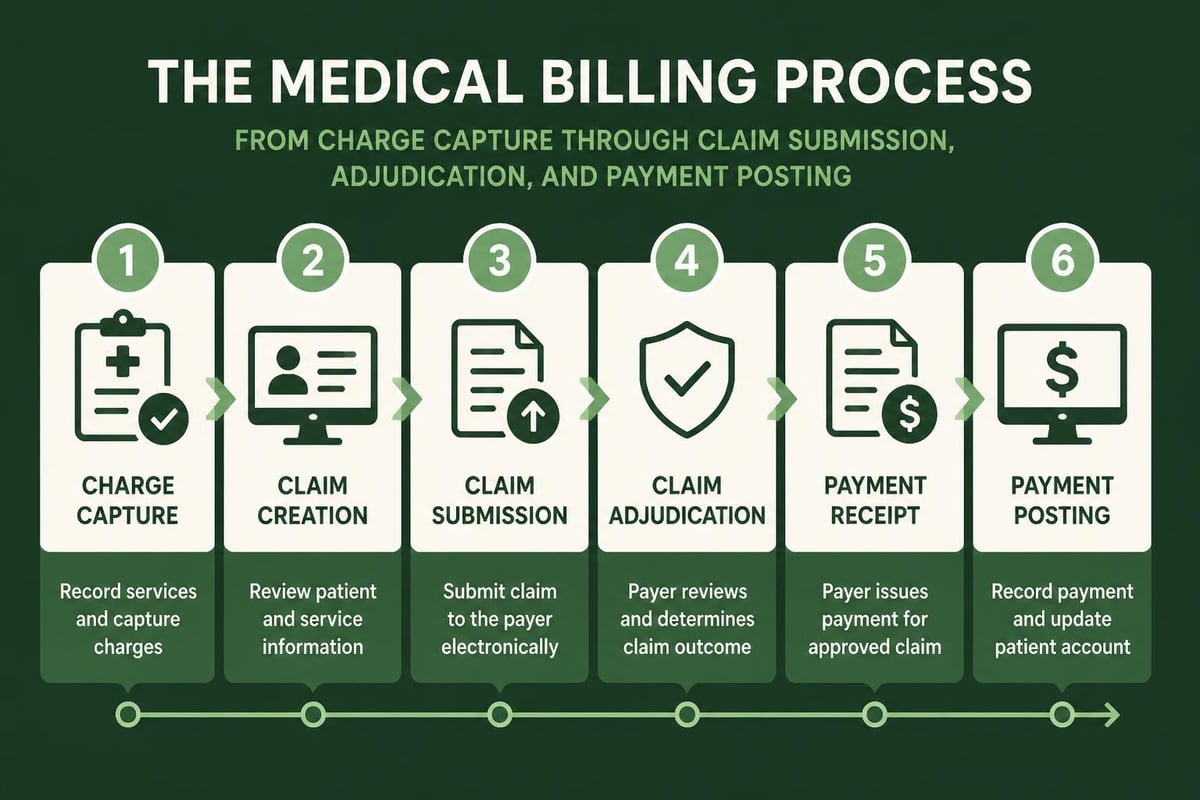
The back-end revenue cycle workflow focuses on claims submission, payment processing, and collections. The Healthcare Financial Management Association emphasizes the importance of streamlined back-end operations for financial success.

Claims processing workflow

Claims Submission and Scrubbing

Submitting clean claims represents a primary objective within any revenue cycle workflow. Clean claims contain no errors or omissions that would prevent processing, allowing for faster payment and reduced administrative costs.

Claims scrubbing technology identifies potential issues before submission. These systems check for common errors including missing information, invalid codes, and coverage inconsistencies. TechTarget explores various revenue cycle technologies that enhance operational efficiency.

Establishing a systematic approach to charge entry in medical billing prevents errors that lead to claim rejections. Accuracy at this stage significantly reduces rework and accelerates payment cycles.

Denial Management Integration

Denial management constitutes an essential component of the revenue cycle workflow. Even well-managed practices experience claim denials, making effective response processes critical.

Successful denial management in medical billing requires systematic analysis of denial patterns, root cause identification, and process improvements to prevent recurring issues. Quick response to denials increases successful appeal rates and maintains healthy cash flow.

Common denial categories requiring workflow attention:

  • Missing or invalid patient information
  • Lack of prior authorization
  • Medical necessity questions
  • Coding errors or inconsistencies
  • Timely filing limit violations
  • Coordination of benefits issues

Optimizing Revenue Cycle Workflow Performance

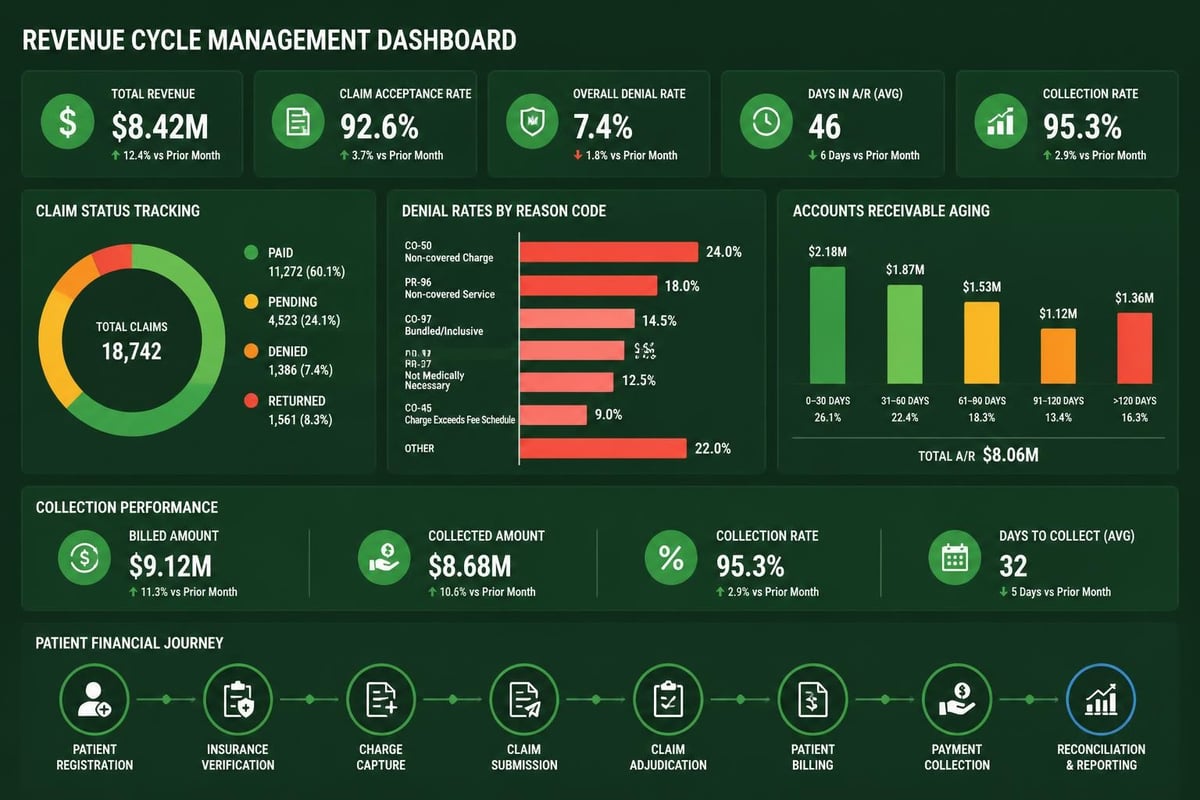
Performance optimization requires continuous monitoring and improvement efforts. The HFMA’s MAP Initiative provides standardized metrics that organizations can use to benchmark their revenue cycle workflow effectiveness.

Key Performance Indicators

Tracking specific metrics helps identify workflow bottlenecks and opportunities for enhancement. Essential KPIs for revenue cycle workflow monitoring include:

Metric Target Range What It Measures
Clean claim rate 95% or higher Initial submission accuracy
Days in accounts receivable 30-40 days Collection efficiency
Denial rate Below 5% Overall process effectiveness
Collection rate 95% or higher Revenue capture success
Cost to collect 2-4% of collections Operational efficiency

Regular analysis of these indicators reveals trends and areas requiring intervention. Practices should establish baseline measurements and set improvement targets aligned with industry benchmarks.

Technology Integration Strategies

Modern revenue cycle workflow management increasingly relies on technology integration. Electronic health records, practice management systems, and specialized billing platforms must communicate seamlessly to support efficient operations.

Automated eligibility verification, electronic claims submission, and electronic remittance advice processing reduce manual tasks and accelerate cash flow. Understanding what ERA means in medical billing helps practices leverage automation for payment posting efficiency.

Revenue cycle optimization

Specialized Workflow Considerations

Different practice types require tailored revenue cycle workflow approaches. Hospital revenue cycle management involves additional complexity compared to physician practices, including facility coding and charge description master maintenance.

Specialty-specific requirements also influence workflow design. Medical billing for behavioral health presents unique challenges related to authorization requirements and payer-specific documentation standards.

The American Medical Association offers strategies for effective revenue cycle management across various practice settings. Adapting these strategies to specific circumstances enhances workflow performance.

Staff Training and Communication

Human expertise remains central to revenue cycle workflow success despite technological advances. Comprehensive training ensures staff understand their roles within the larger process and how their work impacts overall financial performance.

Cross-functional communication between clinical and administrative teams prevents disconnects that lead to revenue leakage. Regular meetings to review metrics, discuss challenges, and share improvements foster a culture of continuous enhancement.

Investing in professional development for billing staff, including certification programs and continuing education, strengthens the knowledge base supporting your revenue cycle workflow. Well-trained teams make fewer errors and resolve issues more efficiently.


Optimizing your revenue cycle workflow requires expertise, dedication, and systematic processes across every stage from patient registration through final payment. Healthcare providers who partner with experienced revenue cycle management specialists gain access to industry best practices, advanced technologies, and skilled professionals dedicated to maximizing reimbursement. Greenhive Billing Solutions delivers comprehensive revenue cycle management services tailored to your practice's unique needs, helping you streamline operations, reduce denials, and improve financial performance through proven workflows and transparent communication.

July 1, 2026

Healthcare providers frequently encounter patients presenting with tick bites, particularly during warmer months when outdoor activity increases. Accurate coding for these encounters directly impacts reimbursement and claims processing efficiency. Understanding the appropriate tick bite ICD 10 code ensures proper documentation, reduces claim denials, and maintains compliance with payer requirements. For revenue cycle management teams and billing professionals, mastering these codes represents a critical component of financial success for medical practices.

Understanding the Primary Tick Bite ICD 10 Code

The primary tick bite ICD 10 code falls under the category W57.XXXA, which designates "bitten or stung by nonvenomous insect and other nonvenomous arthropods, initial encounter." This external cause code requires a seventh character to indicate the encounter type, with "A" representing initial encounter, "D" for subsequent encounter, and "S" for sequela.

Healthcare facilities must pair this external cause code with an appropriate diagnosis code that describes the patient's condition. Common pairings include codes for skin inflammation, infection, or other complications resulting from the tick bite. The ICD-10-CM coding system provides comprehensive guidelines for proper code selection and sequencing.

Encounter-Specific Coding Requirements

Different patient encounters require specific seventh character modifiers to ensure accurate claim submission:

  • Initial encounter (A): First treatment for the tick bite
  • Subsequent encounter (D): Follow-up visits for ongoing treatment
  • Sequela (S): Treatment of long-term effects or complications

Understanding these distinctions prevents claim denials and supports proper revenue cycle management processes. Each encounter type triggers different reimbursement rates and documentation requirements that billing specialists must navigate carefully.

ICD-10 encounter type modifiers for tick bites

Common Clinical Scenarios and Code Selection

Healthcare providers encounter various tick bite presentations that require specific coding approaches. Selecting the correct tick bite ICD 10 code depends on clinical presentation, complications, and treatment provided during the encounter.

Clinical Scenario Primary Code External Cause Code Documentation Required
Uncomplicated tick bite L50.9 (Urticaria) W57.XXXA Location, appearance, treatment
Infected tick bite L08.9 (Local infection) W57.XXXA Culture results, antibiotic orders
Allergic reaction T78.40XA (Allergy) W57.XXXA Reaction severity, medications given
Tick removal only Z48.02 (Encounter for removal) W57.XXXA Removal method, counseling provided

Professional coders and billing specialists working on medical coding revenue cycle management must review clinical documentation thoroughly to determine which codes accurately reflect services rendered. This attention to detail minimizes audit risk and maximizes appropriate reimbursement.

Disease Transmission Considerations

When tick bites result in disease transmission, coding becomes more complex. Conditions like Lyme disease, Rocky Mountain spotted fever, or tick-borne encephalitis require separate, specific diagnosis codes. The AAPC provides detailed guidance on tick-borne viral encephalitis codes within the A84 category.

These cases necessitate careful documentation of laboratory results, clinical symptoms, and treatment protocols. Billing teams must coordinate with clinical staff to ensure all relevant diagnoses receive proper coding attention for complete claim submission.

Documentation Requirements for Accurate Billing

Comprehensive clinical documentation forms the foundation for correct code assignment and successful claim adjudication. Providers must record specific details about tick bite encounters to support the tick bite ICD 10 code selection and justify services billed.

Essential documentation elements include:

  1. Anatomical location: Specific body part affected by the tick bite
  2. Clinical presentation: Redness, swelling, signs of infection
  3. Treatment rendered: Tick removal, wound care, medications prescribed
  4. Patient history: Time since bite occurred, previous tick exposures
  5. Follow-up plans: Return visit instructions, signs of complications to monitor

Quality documentation supports denial management in medical billing by providing auditors and payers with clear justification for services rendered. Incomplete records frequently trigger claim denials that require time-consuming appeals and documentation requests.

Tick bite documentation checklist

Linking Diagnosis to Procedures

Proper code linkage ensures claims demonstrate medical necessity for services provided. When billing for tick removal (CPR code 10120 or 10121), the tick bite ICD 10 code must clearly support the procedure. Understanding what is a CPT code for insurance purposes helps billing teams create defensible claims that withstand payer scrutiny.

Research on automatic association of ICD-10 codes with clinical texts demonstrates the complexity involved in accurate medical coding, highlighting why experienced billing professionals remain essential for revenue cycle success.

Place of Service and Modifier Considerations

The setting where tick bite treatment occurs influences coding and reimbursement. Place of service (POS) codes specify whether care was delivered in an office, emergency department, urgent care center, or other facility type. These codes affect payment rates and must align with supporting documentation.

Urgent care centers frequently treat tick bites, making proper urgent care revenue cycle management practices essential for these facilities. Emergency department visits for tick bites require different coding approaches than routine office visits, particularly when patients present with complications or allergic reactions.

Modifier Application for Multiple Procedures

When providers perform multiple procedures during a tick bite encounter, appropriate types of modifiers in medical billing ensure proper reimbursement. Modifier 25 may apply when a separately identifiable evaluation and management service occurs on the same day as a minor procedure like tick removal.

Billing teams must understand payer-specific modifier requirements to prevent unnecessary claim denials and payment delays that impact practice cash flow.

Challenges in ICD-10 Code Classification

Healthcare organizations face ongoing challenges in maintaining coding accuracy as clinical encounters grow increasingly complex. Studies examining supervised learning in the presence of noise for ICD-10 code classification reveal how coding errors propagate through billing systems, creating downstream revenue cycle problems.

Professional billing specialists and billing and coding specialists provide essential quality control to identify and correct coding discrepancies before claim submission. Their expertise prevents denials and ensures practices receive maximum appropriate reimbursement for services rendered.

Common coding errors for tick bites

Technology and Coding Accuracy

While technology assists with coding tasks, research on the sufficiency of ICD codes for machine learning datasets demonstrates that human expertise remains crucial for accurate code selection. Automated systems cannot replace the clinical judgment and contextual understanding that experienced coders bring to complex cases.

Healthcare practices benefit from partnering with revenue cycle management teams that combine technology capabilities with human expertise to achieve optimal coding accuracy and financial performance.

Best Practices for Revenue Cycle Optimization

Implementing standardized workflows for tick bite encounters improves coding consistency and reduces claim denials. Practices should develop protocols that guide clinical staff through proper documentation requirements while the patient is still present, eliminating gaps that create coding challenges later.

Regular training sessions keep clinical and billing staff current on coding updates and documentation requirements. Creating feedback loops between coders and providers helps identify recurring documentation deficiencies that impact claim success rates.

Monitoring key performance indicators related to tick bite encounters provides valuable insights:

  • Clean claim rate: Percentage of tick bite claims accepted on first submission
  • Days in A/R: Average time from service date to payment receipt
  • Denial rate: Frequency of tick bite claims rejected by payers
  • Appeal success rate: Percentage of denied claims overturned on appeal

These metrics guide continuous improvement efforts and highlight areas requiring additional staff education or process refinement. Understanding what are adjustments on medical bills helps practices track actual reimbursement against expected payment.


Accurate tick bite ICD 10 code selection requires clinical knowledge, attention to documentation detail, and understanding of payer-specific requirements. Healthcare practices that prioritize coding accuracy and comprehensive documentation achieve better financial outcomes through reduced denials and faster payment cycles. Greenhive Billing Solutions delivers expert revenue cycle management services that optimize coding accuracy, streamline claims processing, and maximize reimbursements for healthcare providers across the United States.

June 30, 2026

Endoscopic ultrasound procedures represent a significant component of gastroenterology and oncology practices, yet many providers struggle with proper coding and billing for these services. Understanding the correct eus cpt code assignment is essential for accurate reimbursement and compliance with payer requirements. Medical billing professionals must navigate multiple code options, each representing distinct procedural variations and anatomical considerations. Proper code selection directly impacts revenue capture and reduces the risk of claim denials or audits.

Understanding EUS Procedure Codes

The eus cpt code family encompasses several distinct codes, each representing specific procedural elements and anatomical regions examined. CPT code 43259 describes esophagogastroduodenoscopy with endoscopic ultrasound examination, covering the esophagus, stomach, and either the duodenum or surgically altered stomach. This comprehensive code requires complete examination of multiple anatomical regions to justify billing.

Another frequently utilized code is CPT 43242, which covers endoscopic ultrasound-guided fine needle aspiration or biopsy of the upper gastrointestinal tract. This code specifically addresses diagnostic sampling procedures that combine imaging guidance with tissue acquisition. Understanding when each code applies prevents revenue leakage and ensures compliant billing practices.

EUS CPT code selection flowchart

Key Code Distinctions

Medical billing specialists must recognize the critical differences between diagnostic and therapeutic EUS procedures. Diagnostic codes cover examination and visualization, while therapeutic codes include interventional elements such as:

  • Fine needle aspiration for tissue sampling
  • Drainage procedures for fluid collections
  • Celiac plexus neurolysis for pain management
  • Pseudocyst drainage with stent placement
  • Vascular structure assessment and intervention

Each procedural variation requires specific documentation elements to support the selected code. The National Cancer Institute defines EUS as a procedure combining endoscopy with ultrasound to create detailed images of the digestive tract and surrounding tissues, emphasizing its dual diagnostic capability.

Documentation Requirements for EUS Billing

Complete and accurate documentation forms the foundation of successful EUS claims processing. Providers must document specific elements to justify the eus cpt code selected and demonstrate medical necessity. Insufficient documentation represents one of the primary causes of claim denials in gastroenterology practices.

Documentation Element Required Details Common Deficiencies
Indication Medical necessity rationale Vague or missing clinical justification
Anatomical regions All areas examined with findings Incomplete regional documentation
Equipment specifications Endoscope type, ultrasound frequency Missing technical parameters
Procedural details Step-by-step narrative Generic template language
Pathology correlation Biopsy results when applicable Lack of follow-up documentation

Practices should implement standardized documentation templates that prompt providers to include all necessary elements. However, templates must allow sufficient flexibility for individualized patient details rather than generic, pre-populated language that suggests lack of actual examination.

Medical Necessity Considerations

Payers scrutinize EUS procedures carefully, requiring clear medical necessity before approving reimbursement. Understanding payer policies helps billing teams anticipate coverage requirements and address potential issues proactively. Common medically necessary indications include staging of esophageal or gastric malignancies, evaluation of submucosal lesions, and assessment of chronic pancreatitis complications.

Documentation must clearly link the EUS procedure to the patient's clinical presentation and explain why alternative diagnostic modalities proved insufficient. This becomes particularly important for high-cost procedures where payers may request additional justification or peer review.

Billing Strategies and Reimbursement Optimization

EUS billing workflow

Successful EUS billing requires coordinated efforts across multiple revenue cycle functions. Pre-authorization represents the first critical step, as many commercial payers and Medicare Advantage plans require advance approval for EUS procedures. Verification teams must confirm coverage policies and obtain necessary authorizations before scheduling.

Coding accuracy directly influences reimbursement rates and claim acceptance. Practices utilizing medical billing software for small businesses benefit from built-in coding edits and compliance checks that flag potential issues before claim submission. These systems help identify common coding errors such as:

  1. Incorrect modifier usage with multiple procedures
  2. Unbundling of included services
  3. Missing or invalid diagnosis code linkage
  4. Improper site-of-service coding
  5. Failure to report sedation separately when applicable

Moderate Sedation Billing

According to EUS coding guidelines, moderate sedation should be billed separately when provided and documented appropriately. Prior to certain code revisions, sedation was bundled into many endoscopic procedures, but current guidelines allow separate reporting under specific circumstances.

Providers must document sedation administration, including pre-procedure assessment, intra-procedure monitoring, and post-procedure recovery observation. Time-based elements and personnel involved must appear clearly in the medical record to support separate sedation billing.

Common Coding Errors and Prevention

Revenue cycle teams frequently encounter specific errors when processing EUS claims that lead to denials or underpayment. Understanding these patterns helps practices implement preventive measures and improve clean claim rates. The relationship between proper CPT code usage and successful claim adjudication cannot be overstated.

Bundling and Unbundling Issues

The National Correct Coding Initiative (NCCI) includes numerous edits affecting eus cpt code combinations. Billing teams must recognize which services bundle into the primary procedure and which qualify for separate reporting with appropriate modifiers. For example, biopsy obtained during diagnostic EUS typically requires a distinct code rather than being included in the base examination code.

Modifier application plays a crucial role in explaining code relationships and preventing inappropriate denials. Modifier 59 or its more specific X-modifiers may be necessary when reporting distinct procedural services performed during the same session.

RVU Values and Payment Expectations

Understanding relative value units (RVUs) for EUS procedures helps practices forecast revenue and identify underpayment situations. CPT 43242 RVU data shows the work, practice expense, and malpractice components that determine Medicare payment rates. Commercial payers typically base their fee schedules on Medicare values with varying conversion factors.

Practices should regularly analyze payment patterns to identify payers consistently reimbursing below expected rates. This analysis supports contract negotiations and helps justify requests for improved fee schedules. Healthcare revenue cycle analytics provide the data foundation for these strategic discussions.

Payer-Specific Requirements

Insurance payer policy comparison

Different insurance carriers maintain varying policies regarding EUS coverage and billing requirements. Aetna’s clinical policy on endoscopic ultrasonography outlines medical necessity criteria and applicable CPT codes, demonstrating how payers establish coverage parameters. Billing specialists must familiarize themselves with major payer policies to ensure compliant claim submission.

Medicare coverage policies may differ from commercial payer requirements, particularly regarding local coverage determinations (LCDs) that apply in specific geographic regions. Practices serving diverse patient populations must track requirements across multiple payer contracts.

Appeals and Denial Management

When EUS claims face denial, systematic appeal processes become essential for revenue recovery. Effective denial management requires rapid response times and thorough documentation review to identify correctable errors versus legitimate payment refusals.

Common denial reasons include:

  • Lack of medical necessity documentation
  • Missing or invalid prior authorization
  • Incorrect code selection for documented procedure
  • Insufficient anatomical detail in procedure notes
  • Failure to meet payer-specific coverage criteria

Appeal letters should directly address the specific denial reason with supporting clinical documentation and payer policy citations demonstrating coverage applicability. Many practices benefit from partnering with revenue cycle management specialists who understand gastroenterology-specific coding requirements and payer policies.

Compliance and Audit Preparedness

Regular internal audits of EUS coding practices help identify potential compliance risks before external auditors raise concerns. Practices should review samples of EUS procedures quarterly, comparing documentation against billed codes to ensure accuracy and completeness. This proactive approach protects against future audit liability and improves overall coding quality.

Billing and coding specialists with gastroenterology expertise provide valuable oversight for complex procedural coding like EUS services. Their specialized knowledge helps navigate the nuanced differences between similar codes and ensures documentation meets evolving payer standards.

Training programs should address updates to eus cpt code definitions, bundling edits, and coverage policies as they occur throughout the year. Continuous education maintains coding accuracy despite frequent regulatory changes affecting endoscopic procedures.


Accurate EUS CPT code selection and billing requires specialized knowledge of procedural variations, documentation standards, and payer requirements that directly impact practice revenue. Healthcare providers benefit significantly from partnering with experienced revenue cycle management professionals who understand these complexities and implement proven strategies for optimal reimbursement. Greenhive Billing Solutions delivers comprehensive medical billing services specifically designed for gastroenterology and specialty practices, ensuring accurate coding, timely claim submission, and effective denial management that maximizes your practice's financial performance while maintaining full compliance with regulatory requirements.

Let’s identify where you’re losing revenue and show you how Greenhive can help.

Scroll to Top